
In This Article
Hanging drywall is a strange job. The wall looks forgiving, yet one screw driven a hair too deep punches through the paper face and becomes a permanent little crater in your finish. One screw left a hair proud and it shows up as a bump under every coat of mud. Dozens of screws like that and you’re sanding until Thursday.
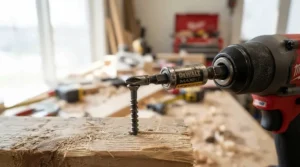
Here’s the good news. You don’t need a dedicated screw gun to avoid most of this grief. The right drill driver bit set accessories for drywall screws turn an ordinary cordless drill into something that behaves a lot like one. A small depth-stopping nose cone, a magnet that holds the screw, and a tip that fits the screw head properly do most of the work.
I’ll be blunt about what this guide is. It isn’t a rewrite of a retail listing. It’s a spec-by-spec, review-by-review breakdown of seven real accessories, from a few-dollar drywall setter to pro-grade dimplers. Along the way you’ll get setup advice, depth-setting tricks and a buying framework you can apply to any bit on the shelf. Everything here is analysis based on published specs and aggregated buyer reports. I haven’t personally bench-tested these bits, and I won’t pretend otherwise.
Prices below are ranges only and shift constantly, so check current price before you buy. Let’s get into it.
Quick Comparison Table: 7 Drywall Screw Accessories at a Glance
| Product | Type | Approx. Price Range | Standout Trait | Best For |
|---|---|---|---|---|
| Bosch D60498 Dimpler | Depth-stop dimpler, #2 Phillips, magnetic tip | Roughly $8-$15 | Clutch-style release, reversible | Serious DIYers, small crews |
| USG Sheetrock The Dimpler | Reversible dimpler bit | Roughly $10-$30 (varies by seller) | Pro-trade pedigree | Patch work and “circle-back” screws |
| DEWALT DW2014C4 | 4-pack insert depth setters | Under $10 | Cheap, replaceable | Small DIY jobs |
| Milwaukee SHOCKWAVE 48-32-2101 | 4-pack insert depth setters | Roughly $7-$15 | Insert-style, drill-driver friendly | Existing Milwaukee users |
| Century Drill & Tool 68599 | Magnetic bit with replaceable #2 Phillips insert | Under $10 | Swappable tip | Budget-conscious repeat users |
| TEURSA 5-Piece Magnetic Drywall Screw Setter | Magnetic collar, adjustable depth | Roughly $8-$15 | Removable depth collar | Tinkerers who want adjustability |
| DEWALT DW2125 | 25-pack #2 Phillips drywall bit tips | Roughly $10-$20 | Bulk volume | Heavy screw counts, collated-style workflows |
The table reveals a clear split. If you want guaranteed depth consistency with the least thinking, the dimplers (Bosch D60498 Dimpler and USG Sheetrock The Dimpler) win. If you want pennies-per-screw economics, the insert-bit options (DEWALT DW2014C4, Milwaukee SHOCKWAVE 48-32-2101) win. And if you like to fine-tune things, the TEURSA 5-Piece Magnetic Drywall Screw Setter is the one built for tinkerers, because its depth is something you can actually adjust.
💬 Just one click — help others make better buying decisions too!😊
What Is a Drill Driver Bit Set Accessory for Drywall Screws?
A drill driver bit set accessory for drywall screws is any bit, setter, collar, or holder that helps a standard cordless drill drive drywall screws to a consistent depth without tearing the paper face. Most feature a #2 Phillips tip, a 1/4-inch hex shank, magnetic screw retention, and some form of depth-stopping mechanism.
That’s the snippet-friendly version. The real-world version is more interesting, because drywall screws are fussier than they look. Their heads are conical rather than flat, and the underside sweeps in a curve like the mouth of a bugle, which is precisely where bugle head screws get their name. That shape is the entire point: it lets the head sink into the gypsum board and form a shallow dimple without cutting the paper facing. Common drywall screws run around a #6 gauge, which tells you the head is small enough that a sloppy bit will chew it or slip out.
Now add the Phillips #2 bits to the picture. Phillips #2 is the standard drive size for these screws, but not every #2 tip is the same. Some manufacturers offer a “reduced diameter” Phillips profile for drywall. The idea is that a slimmer tip can sit inside the recess and release more predictably as the head seats, so it doesn’t tear the paper. One reviewer of a DEWALT DW2125 pack even flagged that it isn’t a standard #2 bit, which is a small but real reminder to read what you’re buying.
Put the three pieces together and you get the logic of every product in this guide. A magnetic tip holds the screw. A depth stop or setter limits penetration. A properly shaped Phillips #2 tip keeps the whole assembly from slipping. Everything else is packaging.
Top 7 Drill Driver Bit Set Accessories for Drywall Screws: Expert Analysis
1. Bosch D60498 Dimpler — best all-round depth control for DIYers
The Bosch D60498 Dimpler is built around a simple, clever idea: a spring-loaded nose that stops the bit from pushing the screw too far. According to the manufacturer’s specs, it’s a 2-inch, 1/4-inch hex-shank setter with a #2 Phillips point, a magnetic tip, and a preset drywall depth. An automatic clutch release disengages the bit when the screw reaches depth, which is exactly the “screw gun feel” you’re trying to approximate with a regular drill.
JLC’s tool review of the Bosch Dimpler adds useful trade context. The reviewer notes that the nose pops off to swap bits or back out stray screws, and that a push-and-twist action defeats the depth stop when you need to. They also credit a redesign that improves access in inside corners, which is a classic weak point for nose-cone setters. One drywall contractor in that coverage even uses it to circle back with a cordless drill and add or reset screws after the main hanging is done.
On paper, that makes the Bosch D60498 Dimpler a strong match for anyone running a modest number of screws. Buyer sentiment, as best I can tell from aggregated reports, is mixed in an instructive way. One reviewer calls it a “game changer” compared with cheap 4-pack dimplers that strip quickly on the Phillips side. Another considers it a waste of money and says a regular bit plus practice does the same job. Translation: it shines for people who don’t want to learn trigger finesse.
Price range: roughly under $15, which is good value if you hang more than a few sheets.
Pros:
- ✅ Preset depth reduces paper tear-out
- ✅ Magnetic tip holds screws securely
- ✅ Reversible for screw removal
Cons:
- ❌ Corner access still needs care
- ❌ Some reviewers find it unnecessary with practice
2. USG Sheetrock The Dimpler — the trade-name classic for touch-up work
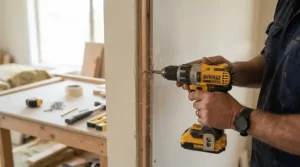
If drywall had a Kleenex, USG Sheetrock The Dimpler might be it. It’s a reversible #2 Phillips setter designed to countersink drywall screws to depth, and the “reversible” part matters: the same tool installs and removes screws, so you aren’t swapping bits mid-job.
Here’s where buyer reports get genuinely useful instead of just noisy. One reviewer used 1-1/4-inch screws into 1/2-inch board and found the heads “tinged” a trowel dragged across them, suggesting they weren’t set deep enough, even after speeding up the drill. Another reviewer reports that it sets screws at a perfect depth with no fuss. A third, on a resale listing, says it worked well with a 12-volt drill and a lower-speed Makita 1/4-inch impact driver, but not with a DeWalt impact driver on a 5Ah battery, which they suspect spins too fast.
So what does the USG Sheetrock The Dimpler tell us? Speed matters. A setter with a clutch-style release needs time to engage, and an impact driver’s high rpm can overshoot the sweet spot. Pair it with a drill driver on a modest speed setting, not a screaming impact, and your odds improve.
It’s also a fine “circle-back” tool for patches and stray screws. Price range runs roughly $10 to $30 depending on seller, so verify current price and stock.
Pros:
- ✅ Reversible for install and removal
- ✅ Trusted trade name in drywall
- ✅ Works well at lower drill speeds
Cons:
- ❌ Inconsistent depth reports with some screw lengths
- ❌ Struggles with high-rpm impact drivers
3. DEWALT DW2014C4 — lowest-cost way to try a depth setter
The DEWALT DW2014C4 is a 4-pack of #2 Phillips insert depth setters, short 1-inch pieces that countersink Phillips screws to depth in drywall, particle board, and plywood. They’re made of shock-resistant tool steel with a hardened core and heat-treated for wear, which is the manufacturer’s way of saying “built to survive a weekend.”
Notice the key design choice: they’re inserts. They drop into a standard magnetic bit holder, which means you buy the holder once and replace the cheap tips as they wear. For a one-room drywall repair, that’s gloriously economical.
An aggregated review summary I found describes the DEWALT DW2014C4 as a handy tool for small projects and DIY hanging, with accurate depth control and reduced drywall damage. It also warns that tip wear and durability could become a headache for extensive or frequent work, and suggests that some users prefer Bosch for heavy-duty tasks. That tracks with the price: a 4-pack under $10 is a consumable, not an heirloom.
Who should buy it? Homeowners patching a closet, finishing a basement section, or hanging a few ceiling sheets. If you’re hanging an entire house, buy more than one pack, or step up to something sturdier.
Price range: under $10 for the 4-pack, with some retailers a few dollars higher. Check current price.
Pros:
- ✅ Very low cost per setter
- ✅ Replaceable insert design
- ✅ Handles drywall, particle board, plywood
Cons:
- ❌ Tip wear reported on heavy use
- ❌ Not magnetic on its own without a holder
4. Milwaukee SHOCKWAVE 48-32-2101 — Milwaukee’s answer to the cheap setter
The Milwaukee SHOCKWAVE 48-32-2101 is a 4-piece pack of drywall screw setters for drill drivers, with a PH2 tip and a 1/4-inch hex shank. The tool is designed to stop automatically when the screw reaches depth, preventing over-driving and damage to the board. Each piece is insert style, with an engraved size so you can tell what you’ve grabbed in a messy toolbox.
Think of it as the cousin of the DEWALT DW2014C4: same philosophy, different logo. The practical difference is where it fits into your ecosystem. If your bit holders, drill, and impact driver are already Milwaukee, this keeps everything consistent.
I couldn’t verify a meaningful pool of independent buyer reviews for this exact product, so I’m not going to invent sentiment. What the spec sheet does tell us is that the setters are meant for drill drivers, not specialized screw guns, and that the depth-stop approach is the standard collar-and-insert design. Expect it to behave like its competitors: fine for modest jobs, more consumable than permanent.
One practical note: Milwaukee also sells a Milwaukee SHOCKWAVE 48-32-4746 25-pack of reduced-diameter drywall insert bits for when you want a plain tip rather than a setter, so you can mix and match for different tasks.
Price range: roughly $7 to $15 for the 4-pack. Verify current price.
Pros:
- ✅ Designed to stop before over-driving
- ✅ Engraved size marking
- ✅ Fits drill-driver workflows easily
Cons:
- ❌ Limited verifiable reviews
- ❌ Insert style needs a holder
5. Century Drill & Tool 68599 — replaceable-tip magnetic driver on a budget
The Century Drill & Tool 68599 takes a slightly different route. It’s a magnetic drywall driver with a replaceable #2 Phillips insert, built on S2 steel with a 1/4-inch hex shank. The manufacturer claims it lasts twice as long as standard screwdriving bits and converts a standard drill into something resembling a power screw gun, setting screws flush in gypsum board, plywood, and decking.
Treat the “lasts 2X longer” line as a marketing claim, not a lab result. But the replaceable insert is a genuine design advantage. Instead of discarding a whole bit when the tip rounds off, you swap the insert and keep going. That’s a long-term cost win for anyone who reuses the same driver across projects.
It’s also a good bridge between the cheapest inserts and the pricier dimplers. You get the magnet and a depth-setting feel without paying dimpler money. The limitation is the same one that haunts all budget options: consistency depends on how steady your trigger control is.
I didn’t find enough verified buyer reviews for this exact model to summarize sentiment honestly, so I’ll leave it at what the specs imply. It’s best for homeowners who do drywall repairs a few times a year and prefer one durable body with swappable tips.
Price range: under $10. Check current price.
Pros:
- ✅ Replaceable #2 Phillips insert
- ✅ Magnetic screw holding
- ✅ S2 steel construction
Cons:
- ❌ Reviews hard to verify for this model
- ❌ Depth control still depends on technique
6. TEURSA 5-Piece Magnetic Drywall Screw Setter — adjustable collar for fine-tuners
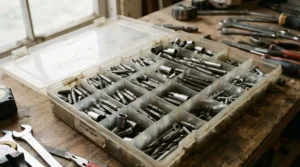
Here’s the lesser-known pick, and arguably the most interesting. The TEURSA 5-Piece Magnetic Drywall Screw Setter uses a removable aluminum collar to set screw depth, plus a magnetic ring that holds screws in place. A related 5-piece Saipe set I came across lists S2 alloy steel, a roughly 50 mm (2-inch) length, a 1/4-inch hex shank, and the same magnetic collar with adjustable depth stop. These generic-style sets share the same basic design.
The adjustability is the headline. Many setters are preset, so you live with whatever depth the manufacturer chose. With an adjustable collar, you can dial depth to match thicker board, softer board, or a particular screw length. For anyone fighting inconsistent results with preset tools, that’s a real advantage.
The trade-off: adjustable means more variables, and more variables mean more ways to set it wrong. Also, brand-name quality control isn’t a given with import-style multi-packs. A related 5-piece magnetic set carries a 4.2-out-of-5 average across about 45 reviews on one retailer, but I can’t confirm that’s the same product as this one, so don’t read that as this model’s rating.
Five pieces make it a good “spares” pack. Keep one in the truck, one in the garage, one in the kit.
Price range: roughly $8 to $15 for the five-piece set. Check current price.
Pros:
- ✅ Adjustable depth via removable collar
- ✅ Magnetic ring holds screws
- ✅ Five-piece pack for spares
Cons:
- ❌ Quality varies across generic brands
- ❌ Adjustability adds setup steps
7. DEWALT DW2125 — bulk #2 Phillips tips for big screw counts
The DEWALT DW2125 isn’t a setter at all. It’s a 25-pack of #2 Phillips drywall bit tips made from alloy steel, aimed at people who drive an alarming number of screws. Think of it as ammunition rather than a tool.
Why include it? Because depth setters aren’t the only way to get clean results. If you pair a good magnetic holder with a stack of fresh, correctly shaped tips and a drill with a decent clutch, you can control depth through technique, and always having a sharp tip prevents cam-out. One reviewer praised the bits as just what they needed to replace broken ones, while another noted it’s a drywall-specific bit, not a standard #2.
That second comment is the key. A drywall tip is shaped for these screws, so it may not behave like a generic Phillips bit on other fasteners. Use it for drywall and keep your regular bits for everything else.
The DEWALT DW2125 shines when you’d otherwise burn through cheap tips and keep stopping to hunt for a replacement. It also pairs well with the insert-style setters above, since inserts and tips share the same 1/4-inch workflow.
Price range: roughly $10 to $20 for the 25-pack. Check current price.
Pros:
- ✅ Large pack lowers cost per tip
- ✅ Drywall-specific tip shape
- ✅ Great for replacing worn bits
Cons:
- ❌ No built-in depth control
- ❌ Not a standard #2 profile
Practical Usage Guide: Setting Countersink Depth Like a Pro
Countersink depth is the whole game, so let’s make it concrete. The target is simple: the screw head should sit just below the paper surface, creating a shallow dimple without breaking the paper. That dimple is where joint compound hides the fastener.
Step 1: Test on scrap. Before touching your wall, drive three screws into a leftover piece of the same board thickness. Run a putty knife across the heads. If it catches, you’re proud. If the paper is torn, you’re too deep.
Step 2: Set your drill’s clutch first. Start at a low-to-mid clutch setting and increase one notch at a time until the screws seat correctly. A setter is a second line of defense, not a replacement for a clutch.
Step 3: Keep speed moderate. As the USG buyer reports suggest, very high rpm can overshoot a setter’s release point. Use a lower speed range on your drill driver when working with dimplers.
Step 4: Push straight and square. Tilted bits slip, strip heads, and tear paper. Keep your wrist and the bit in a straight line with the screw.
Step 5: Re-check as you go. Every 20 screws, run the putty knife test again. Tips wear, collars shift, and batteries lose punch.
Common mistakes in the first 30 days: over-tightening a collar, forgetting to replace a rounded tip, and driving screws too close to board edges. Keep screws about 3/8 inch from the edge to avoid crumbling the gypsum.
If you’re using the TEURSA 5-Piece Magnetic Drywall Screw Setter, adjust its collar in small increments and retest after each change. If you’re using the Bosch D60498 Dimpler, remember the push-and-twist trick to bypass the depth stop for awkward spots.
✨ Don’t Miss These Exclusive Deals!
🔍 Take your drywall project to the next level with these carefully selected products. Click on any highlighted item to check current pricing and availability. These tools will help you create clean, paint-ready walls you’ll be proud of!
Real-World Scenarios: Which Accessory Fits Which Project?
Specs are abstract. Projects are not. Here are three profiles, each matched to a best pick.
The weekend patcher. You’re fixing a few holes after moving a TV mount, maybe 20 screws total, on a budget of under $20. The DEWALT DW2014C4 4-pack is plenty. You already own a drill driver and a magnetic holder, and cheap inserts do the job without drama.
The basement finisher. You’re hanging roughly 40 sheets across a finished basement over three weekends, using a corded or cordless drill at moderate speed. Here the Bosch D60498 Dimpler earns its keep. Hundreds of screws over multiple sessions mean consistent depth matters, and fewer torn-paper patches means less mud and sanding.
The occasional contractor. You hang or repair drywall a few times a month for clients, and you bounce between jobs and drills. A pairing makes sense: a USG Sheetrock The Dimpler for touch-up and reversible work, plus a DEWALT DW2125 25-pack so you always have fresh tips on hand. That setup costs less than a single premium impact driver and covers 90% of scenarios.
If you hang entire houses regularly, honestly, a dedicated screw gun with a nose cone is the right tool. These accessories are for people whose drywall work is intermittent but whose standards are not.
Problem → Solution Guide: Fixing the Five Most Common Drywall Screw Headaches
Problem 1: Screws sink too deep and tear the paper. Solution: add a depth-stopping setter like the Milwaukee SHOCKWAVE 48-32-2101, lower your clutch setting, and reduce trigger pressure near the end.
Problem 2: Screw heads stay proud. Solution: check your tip wear first. A rounded DEWALT DW2125 tip can slip before the head seats. If tips are fresh, increase clutch torque one step or lower speed so a dimpler has time to release.
Problem 3: The bit cams out and chews the screw head. Solution: use a correctly shaped Phillips #2 tip, press firmly, and replace worn tips immediately. Reduced-diameter profiles, such as the Milwaukee SHOCKWAVE 48-32-4746, are designed to release more cleanly.
Problem 4: You keep dropping screws overhead. Solution: use a magnetic holder or a magnetic setter like the Century Drill & Tool 68599. It’s the cheapest upgrade for ceiling work and arguably the most appreciated by your shoulders.
Problem 5: Inside corners won’t let the nose cone reach. Solution: swap to a plain tip for the corner screws. A published patent on depth-setter bit holders notes that in corners the ring can cause the bit to disengage prematurely, leaving the screw head exposed, and that the entire setter must be replaced with a standard bit. The patent’s description of the problem matches what many users complain about, and the practical fix is to keep a plain DEWALT DW2125 tip handy for corners.
How to Choose a Magnetic Drywall Bit Set for Drill Driver Use
Choosing a magnetic drywall bit set for drill driver work is easier than shopping feels. Follow these seven steps.
- Confirm the shank. A 1/4-inch hex shank fits nearly every drill driver chuck and impact driver. This is non-negotiable.
- Match the drive. Phillips #2 fits standard drywall screws. Verify the tip profile too, since drywall-specific tips can differ from generic #2.
- Decide how you want depth control. Preset (Bosch D60498 Dimpler), adjustable (TEURSA 5-Piece Magnetic Drywall Screw Setter), or technique-only (DEWALT DW2125).
- Check magnetism. A strong magnet is the difference between one-handed overhead work and constant screw-hunting.
- Think about replaceability. Inserts and replaceable tips (Century Drill & Tool 68599, DEWALT DW2014C4) cut long-term cost.
- Consider your driver. High-rpm impact drivers can overshoot clutch-style setters. Lower-speed drills pair better.
- Count your screws. Under 100 screws? Cheap inserts. Over 500? Invest in a sturdier dimpler plus spares.
The practical heart of that list is step 3. Every other decision flows from how much depth control you want delegated to the accessory versus your own thumb.
Features That Actually Matter (And Those That Don’t)
Marketing loves to pile on features. Here’s the filter.
Matters: a magnetic tip, a properly shaped Phillips #2, and some form of depth control. These three directly affect finish quality and speed.
Matters, but only sometimes: replaceable inserts. They save money over time, but only if you actually reuse the holder.
Mostly marketing: impressive-sounding steel grades. S2, tool steel, heat-treated, hardened core: they all sound serious, and they all translate to roughly “hard enough for drywall.” Drywall is soft. A bit rarely fails from material weakness. It fails from tip rounding, misuse, or cam-out, which better technique and fresh tips solve more reliably than steel upgrades.
Not as important as you think: extra-long bit lengths. A 2-inch bit is plenty for drywall, and extra length only adds wobble.
Often overlooked: how a setter behaves in corners and tight spaces, and whether the nose cone obstructs your view of the screw. A bit that hides the screw head is a bit that causes mistakes.
Drywall Dimpler Bit for Drill Driver vs Standard Phillips Bit: What’s the Difference?
A drywall dimpler bit for drill driver use adds a depth-stopping nose and often a clutch-style release. A standard Phillips bit has neither. One brainbound-style guide I found puts it plainly: a standard bit has no depth-stopping mechanism, so it’s easy to drive a screw too deep and rupture the paper.
Think of the difference like cruise control versus manual throttle. Both get you there. One requires attention every second.
Where dimplers win: consistent depth across hundreds of screws, fewer torn faces, less sanding, and easier learning curve for beginners.
Where standard bits win: corners, tight spaces, speed on forgiving screws, and cost. A standard bit is also more versatile for non-drywall fasteners.
The hybrid approach is often smartest. Use a Bosch D60498 Dimpler or USG Sheetrock The Dimpler for field screws, then switch to a plain tip for corners and edges. Many pros do exactly that, and the JLC review I mentioned earlier describes a contractor using a dimpler for circle-back work rather than primary hanging.
The honest takeaway: a dimpler isn’t magic, but it moves skill from your hands into the tool. For occasional users, that trade is usually worth a few dollars.
Common Mistakes When Buying Drywall Screw Accessories
Mistake 1: Buying on price alone. A 4-pack under $10 is great until you need 8 packs. Calculate cost per screw, not cost per pack.
Mistake 2: Ignoring your driver’s speed. As reviewers of the USG Sheetrock The Dimpler noted, high-rpm impact drivers can overshoot the release point.
Mistake 3: Skipping a test on scrap. Always verify depth on spare board first.
Mistake 4: Confusing drywall tips with generic bits. Some drywall tips use reduced profiles. Mixing them with generic Phillips bits leads to slippage.
Mistake 5: Believing “magnetic” means “secure.” Magnets hold screws, but they don’t prevent cam-out. Pressure and tip quality still matter.
Mistake 6: Forgetting corners. Nose cones can’t always reach inside corners. Keep a plain tip in your pocket.
Mistake 7: Overbuying. You don’t need every product in this guide. Two well-chosen accessories beat a drawer full of duplicates.
Benefits vs Traditional Alternatives: Accessories vs a Collated Screw Gun
| Option | Speed | Depth Consistency | Upfront Cost | Best For |
|---|---|---|---|---|
| Bosch D60498 Dimpler on a drill driver | Moderate | High | Low | Occasional hangers |
| DEWALT DW2014C4 on a drill driver | Moderate | Moderate | Very low | Small repairs |
| Dedicated screw gun | Fast | Very high | Higher | Pros hanging whole houses |
| DEWALT DW2125 tips, technique only | Moderate | Skill-dependent | Low | Experienced users |
Looking at this comparison, the accessory route trades some speed and consistency for a dramatically lower entry cost. A dedicated screw gun makes sense once you’re hanging full houses, but for occasional work the Bosch D60498 Dimpler gets you surprisingly close. And if your budget is truly tight, the DEWALT DW2014C4 is the cheapest path to a respectable result.
Long-Term Cost & Maintenance: What Your Accessories Really Cost
Cost per screw is a better metric than sticker price, so let’s compare.
| Product | Approx. Price Range | Expected Lifespan (Qualitative) | Value Verdict | Best For |
|---|---|---|---|---|
| DEWALT DW2014C4 | Under $10 | Short on heavy use | Great for small jobs | Weekend patchers |
| Milwaukee SHOCKWAVE 48-32-2101 | Roughly $7-$15 | Short to moderate | Fair, brand-dependent | Milwaukee users |
| Bosch D60498 Dimpler | Roughly $8-$15 | Longer | Strong value | Frequent DIYers |
| DEWALT DW2125 | Roughly $10-$20 | Many tips, many jobs | Best bulk value | High screw counts |
The numbers suggest an interesting pattern. The cheapest packs aren’t always the cheapest over time. If you’ll hang more than a few sheets, a sturdier option like the Bosch D60498 Dimpler often wins on cost per screw. Meanwhile, the DEWALT DW2125 wins on pure tip economics because each tip is a cheap, disposable component.
Maintenance is minimal but real. Wipe off gypsum dust, check magnets for built-up debris, and replace rounded tips immediately. A worn bit is the single most common reason for cam-out and stripped heads. Store accessories in a small case so tips don’t scatter, and check collars on adjustable options like the TEURSA 5-Piece Magnetic Drywall Screw Setter for looseness.
Safety Guide: Dust, Eyes, and Ear Protection
Drywall work is dusty, and the dust matters. Cutting and sanding gypsum board and joint compound create fine particles that irritate eyes and lungs. For deeper background on respirable dust hazards on job sites, OSHA’s crystalline silica resource is a useful reference on dust controls and protective practices, even though gypsum board dust is a different material.
Practical protections:
- Eye protection: wear safety glasses, especially overhead.
- Dust mask or respirator: use at least an N95-rated mask when sanding or cutting.
- Hearing protection: drills and impact drivers are louder than people assume.
- Clear workspace: screws and bits on the floor are trip and slip hazards.
One accessory-specific tip: nose-cone setters can hide the screw head from your view. Take a moment to confirm your hand position before pressing, because a slipping bit near your hand can cause a nasty gouge. Nothing in this guide replaces your local safety codes or your tool manufacturer’s instructions.
FAQ
❓ What is the best drill driver bit set for drywall screws?
❓ Do I need a dimpler to hang drywall with a drill?
❓ Are magnetic drywall bits worth it?
❓ Can I use an impact driver with a drywall dimpler?
❓ How often should I replace Phillips #2 drywall bits?
Conclusion
Let’s boil it down. The right drill driver bit set accessories for drywall screws are less about brand loyalty and more about matching the tool to the job. If you want foolproof depth with minimal fuss, the Bosch D60498 Dimpler and USG Sheetrock The Dimpler are the strongest picks, with the caveat that speed and screw length affect results. If you’re patching a wall and watching your wallet, the DEWALT DW2014C4 and Milwaukee SHOCKWAVE 48-32-2101 get you there for coffee money. If you like to tinker, the TEURSA 5-Piece Magnetic Drywall Screw Setter offers adjustability. For long-haul screw counts, the DEWALT DW2125 and the replaceable-tip Century Drill & Tool 68599 keep your cost per screw low.
Remember the core logic: a magnetic tip, a properly shaped Phillips #2, and a way to control countersink depth. Everything else is garnish. Test on scrap, keep your speed reasonable, swap worn tips, and keep a plain bit for corners.
Do that, and your walls will be ready for mud without the crater-and-bump drama.
✨ Ready to upgrade your drywall toolkit? 🔍 Check current prices and availability on the picks above, grab the setup that fits your project, and enjoy cleaner, faster, paint-ready walls! 🛠️
Recommended for You
- Cordless Drill Driver for Seniors with Arthritis: 7 Best Picks (2026)
- Drill Driver for Assembling Flat Pack Furniture: 7 Proven Picks 2026
- Compact Drill Driver for Tight Cabinet Spaces: 7 Proven Picks (2026)
Disclaimer: This article contains affiliate links. As an Amazon Associate, I earn from qualifying purchases. If you purchase products through these links, we may earn a small commission at no additional cost to you.
✨ Found this helpful? Share it with your friends! 💬🤗
